Early Career Researchers involved in R2D2-MH

Dr. Ciara Molloy, Senior Research Fellow, Trinity College Dublin
In her work, Ciara uses multi-methodological approaches (MRI, EEG, eye-tracking, neurocognitive and neuropsychological measures) to characterise brain and behavioural development. This is needed to better understand the biological and clinical heterogeneity in neurodevelopmental conditions and related-rare genetic conditions.
In R2D2-MH, Ciara is involved in the Relative Diversity in Neurexin Trajectories (RaDiaNT) study, which is a multi-site, family-based study that aims to build the largest cohort of NRXN1-deletion, a rare neurodevelopmental-associated genetic condition. The RaDiaNT study aims to investigate genetic factors influencing risk and resilience to clinical, cognitive, language and adaptive functioning outcomes in individuals carrying this deletion. Ciara is also involved in a study collaborating with adult and youth co-creation members to critically evaluate whether existing measures of social functioning align with neuro-affirmative principles.
Ciara also leads the Early Career Researchers group.
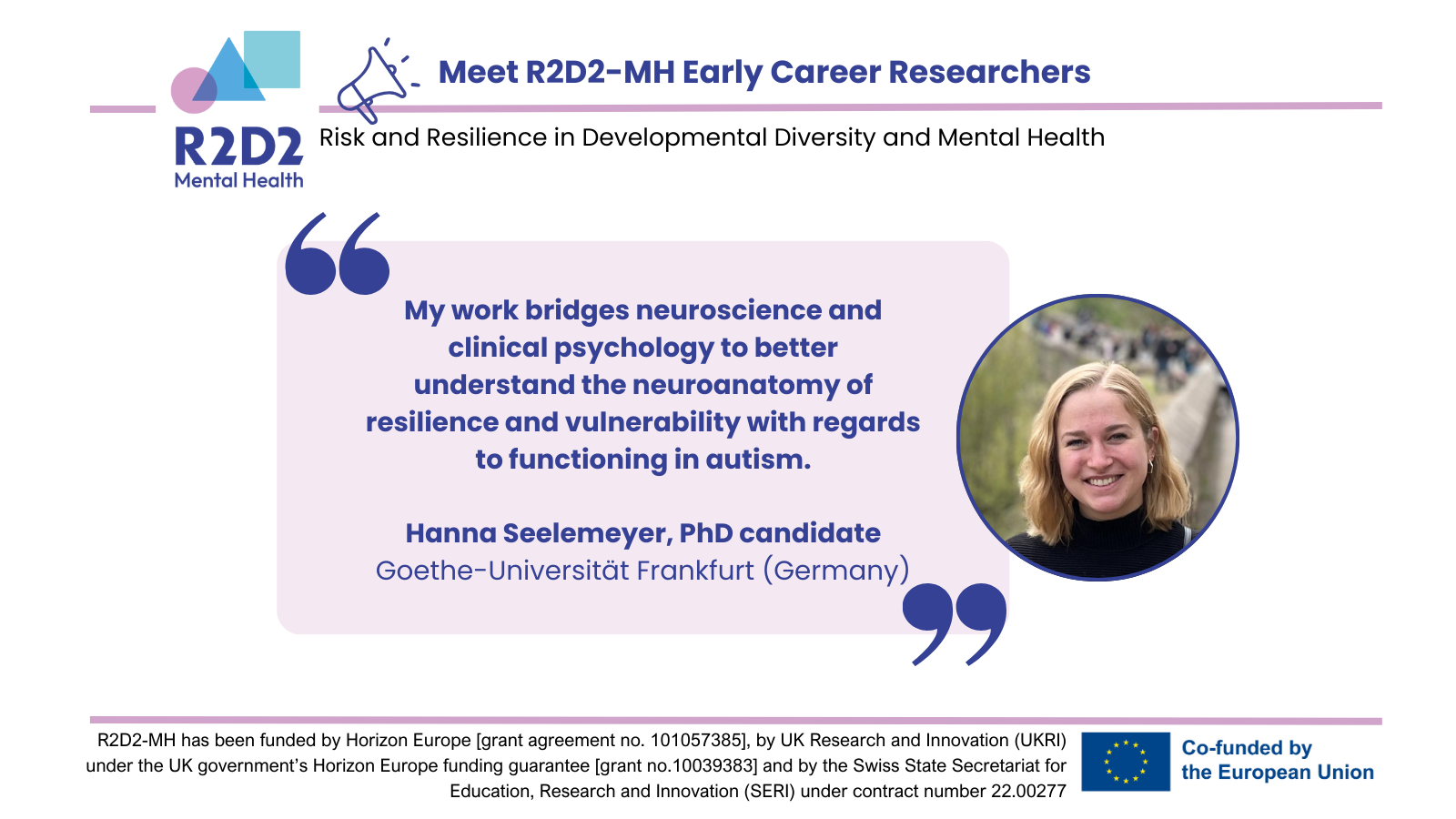
Hanna Seelemeyer, PhD candidate, Goethe Universität Frankfurt
Hanna is a psychologist specialised in clinical psychology and neuroscience and is in the final year of her PhD at the Goethe Universität Franfkurt, focusing on the neuroanatomical, genomic and behavioral correlates of autism. Hanna is also finishing her practical training as a child and adolescent psychotherapist.
In R2D2-MH, Hanna investigates the neuroanatomy of resilience and vulnerability with regards to functioning in autism.
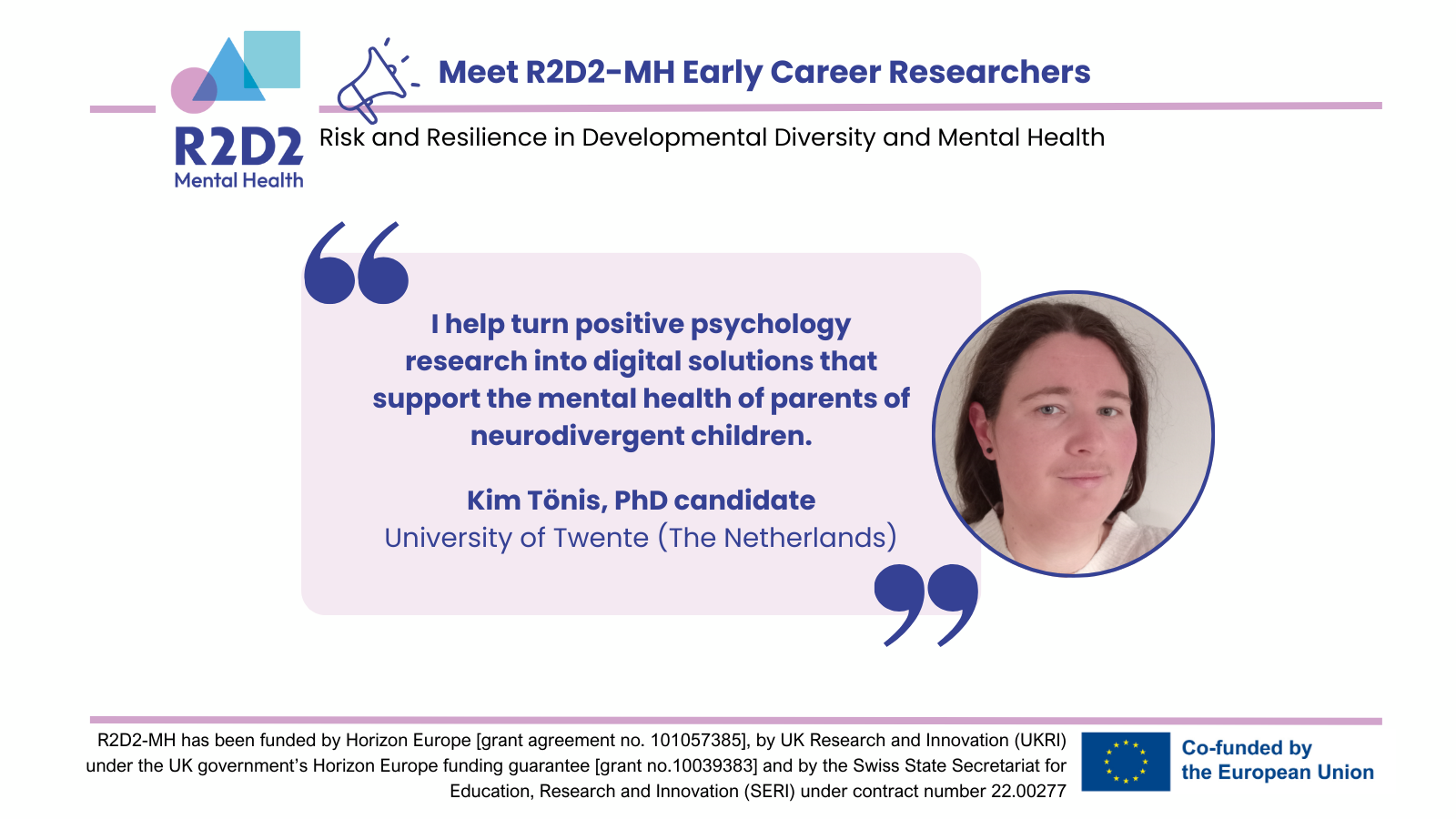
Kim Tönis, PhD candidate, University of Twente
Kim obtained a Master’s degree in both Psychology (Positive Psychology & Technology) and Educational Science & Technology.
In R2D2MH, Kim contributes to the research that leads to the content of the ADAPPT app, that supports the mental health of parents of neurodivergent children, and it’s effectiveness evaluation. More information about the ADAPPT study and app.
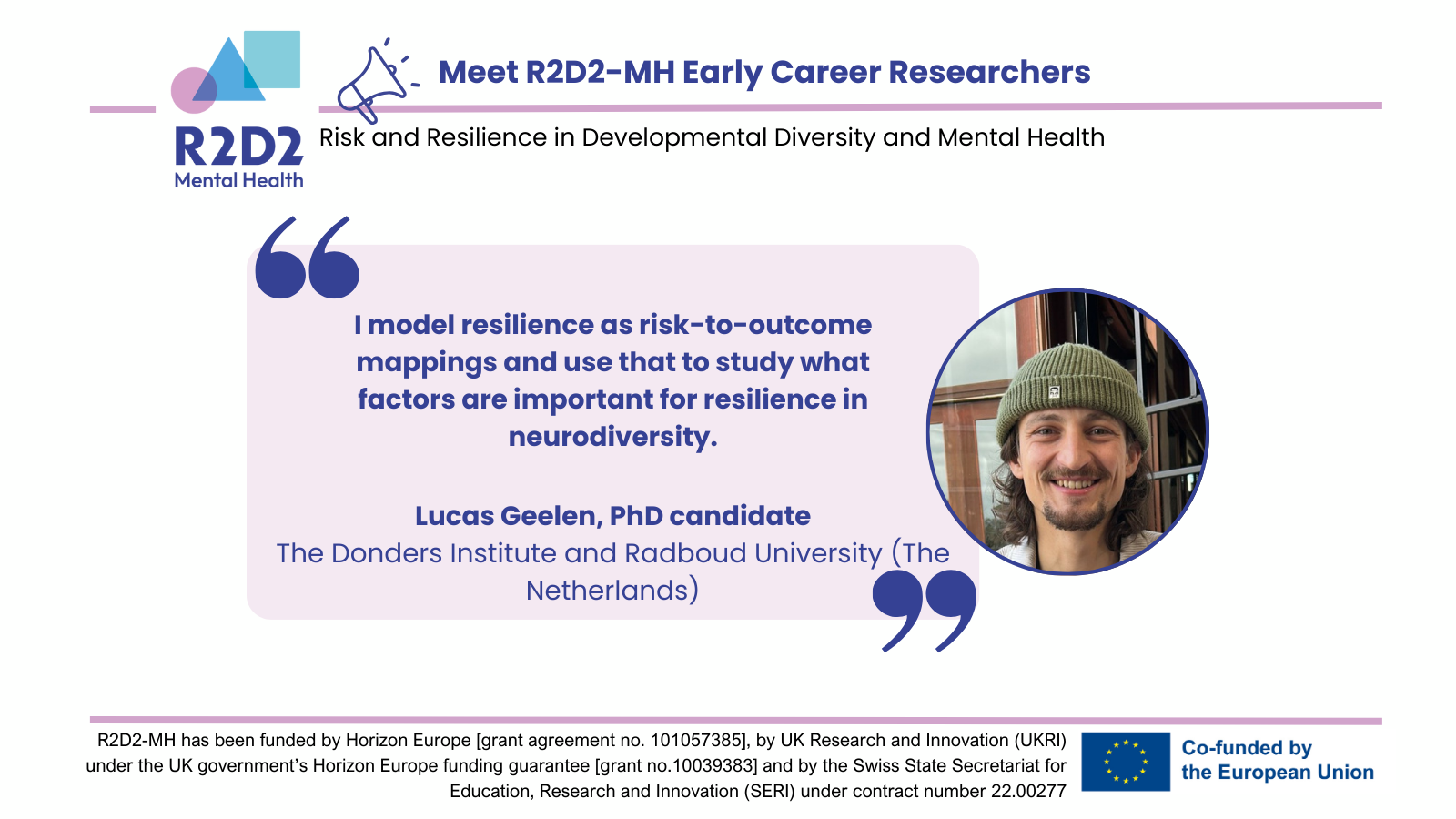
Lucas Geelen, PhD candidate, The Donders Institute and Radboud University
Lucas is a PhD candidate with a background in cognitive neuroscience and has been involved in 2 other EU-funded projects, CANDY and AIMS-2-TRIALS, in the data collection from preschoolers to adults with and without developmental conditions.
In R2D2-MH Project, Lucas models resilience as risk-to-outcome mappings and uses that to study what factors are important for resilience in neurodiversity.
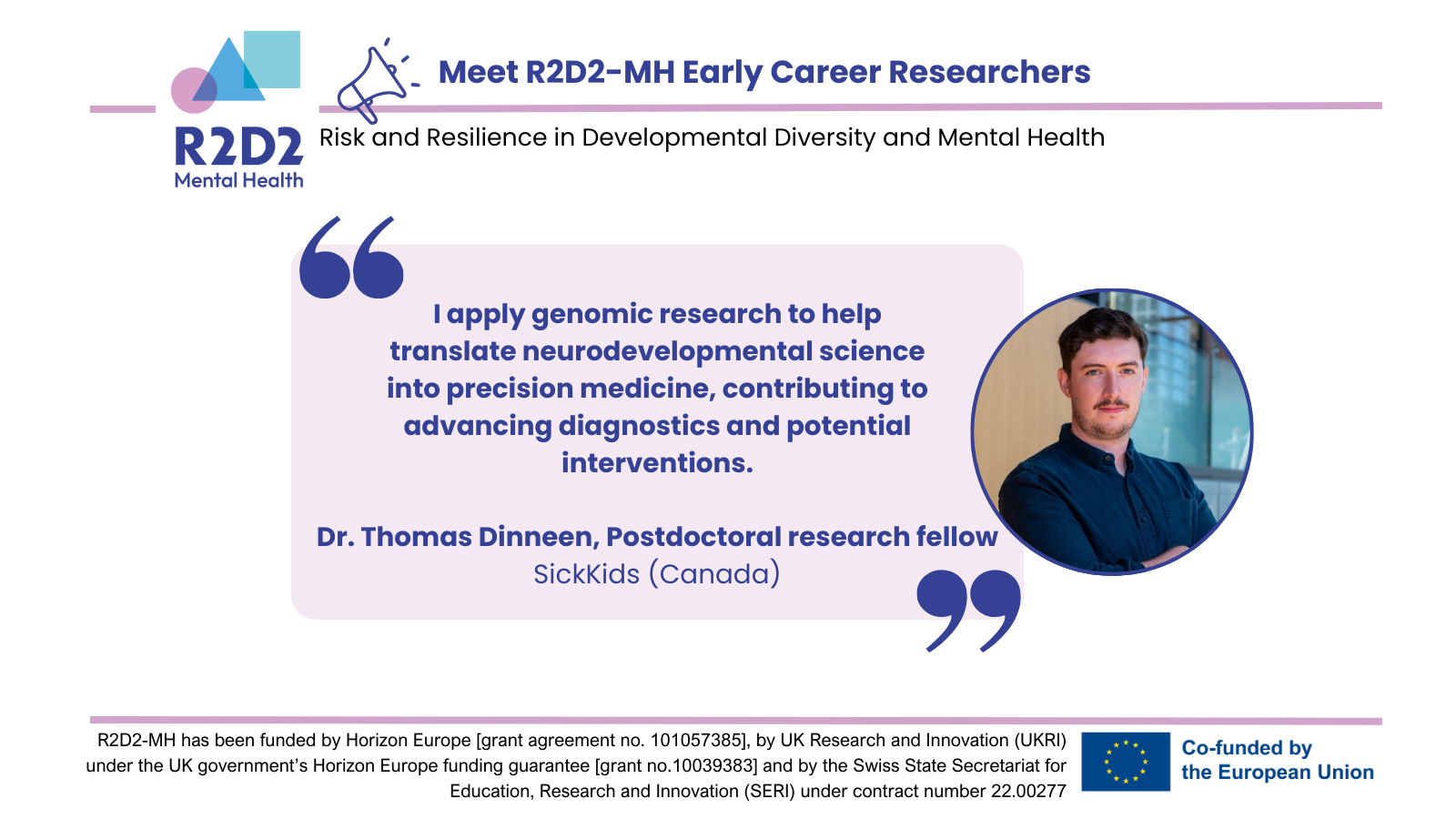
Dr. Thomas Dinneen, Postdoctoral fellow, SickKids
Thomas is a postdoctoral research fellow at The Hospital for Sick Children, investigating the genomics of neurodevelopmental conditions to advance diagnostics and inform potential interventions.
In R2D2MH, Thomas is conducting a long-read sequencing pilot study of families with NRXN1 deletions, research supervised by Louise Gallagher (work-package 1 co-lead). The analysis is ongoing and results are expected in the latter half of 2026. Thomas’ approach focuses on translating research findings into precisionmedicine.
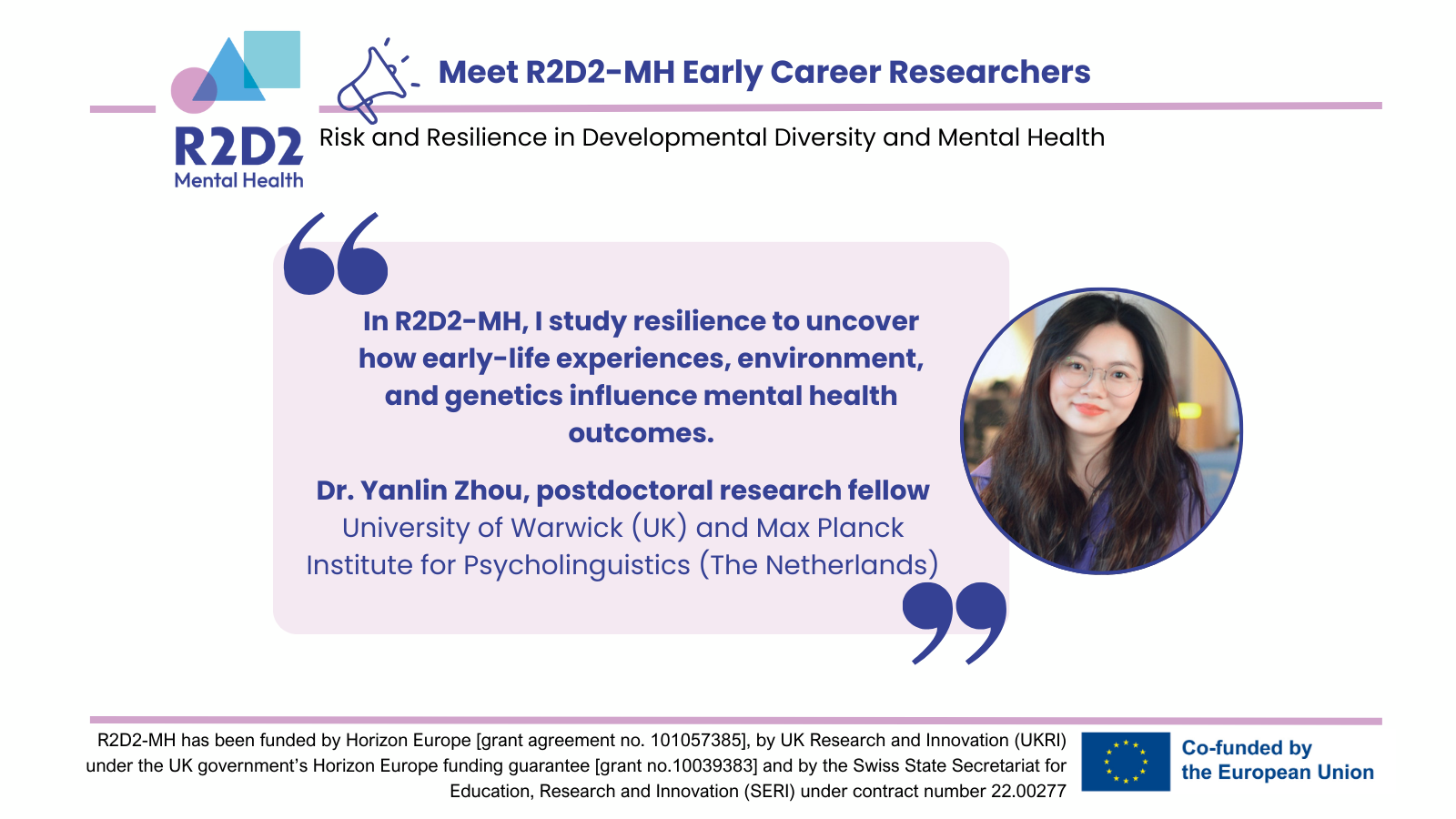
Dr. Yanlin Zhou, postdoctoral research fellow, University of Warwick and Max Planck Institute for Psycholinguistics
Yanlin is a resilience researcher with a background in psychology, specializing in family and cognitive factors’ impact on resilience and mental health, and is now expanding her expertise to include genetics.
💡 Over the past three years, Yanlin worked as a postdoctoral researcher on the R2D2MH project with Dieter Wolke at the University of Warwick, studying risk and resilience in preterm populations through longitudinal cohort studies.
This experience expanded Yanlin’s expertise in resilience and led to her current Marie Skłodowska-Curie Actions (MSCA) Postdoctoral Fellowship project at Max Planck Institute for Psycholinguistics, in collaboration with Beate St Pourcain, exploring the genetic and environmental factors of resilience to early-life stress.



This work has received funding from Horizon Europe [grant agreement no. 101057385], from UK Research and Innovation (UKRI) under the UK government’s Horizon Europe funding guarantee [grant no.10039383] and from the Swiss State Secretariat for Education, Research and Innovation (SERI) under contract number 22.00277.
© Copyright R2D2